
We are committed to protecting your personal data and providing you with access to your personal data in accordance with the personal data protection laws in force in the European Union.
By clicking "Accept All", you are giving us permission to place cookies to enhance your experience on this website, to help us analyze site performance and usage, and to allow us to deliver relevant marketing content. You can manage your cookie settings below. By clicking "Confirm" you agree to the current settings.
2026-10-29
Blog
A Closer Look at Firefighting Suspender Pads
Firefighting suspender pads are designed to provide support during demanding operations. Their role becomes more important when firefighters wear a complete protective ensemble, including an SCBA, protective clothing, and other equipment that adds load around the shoulders.
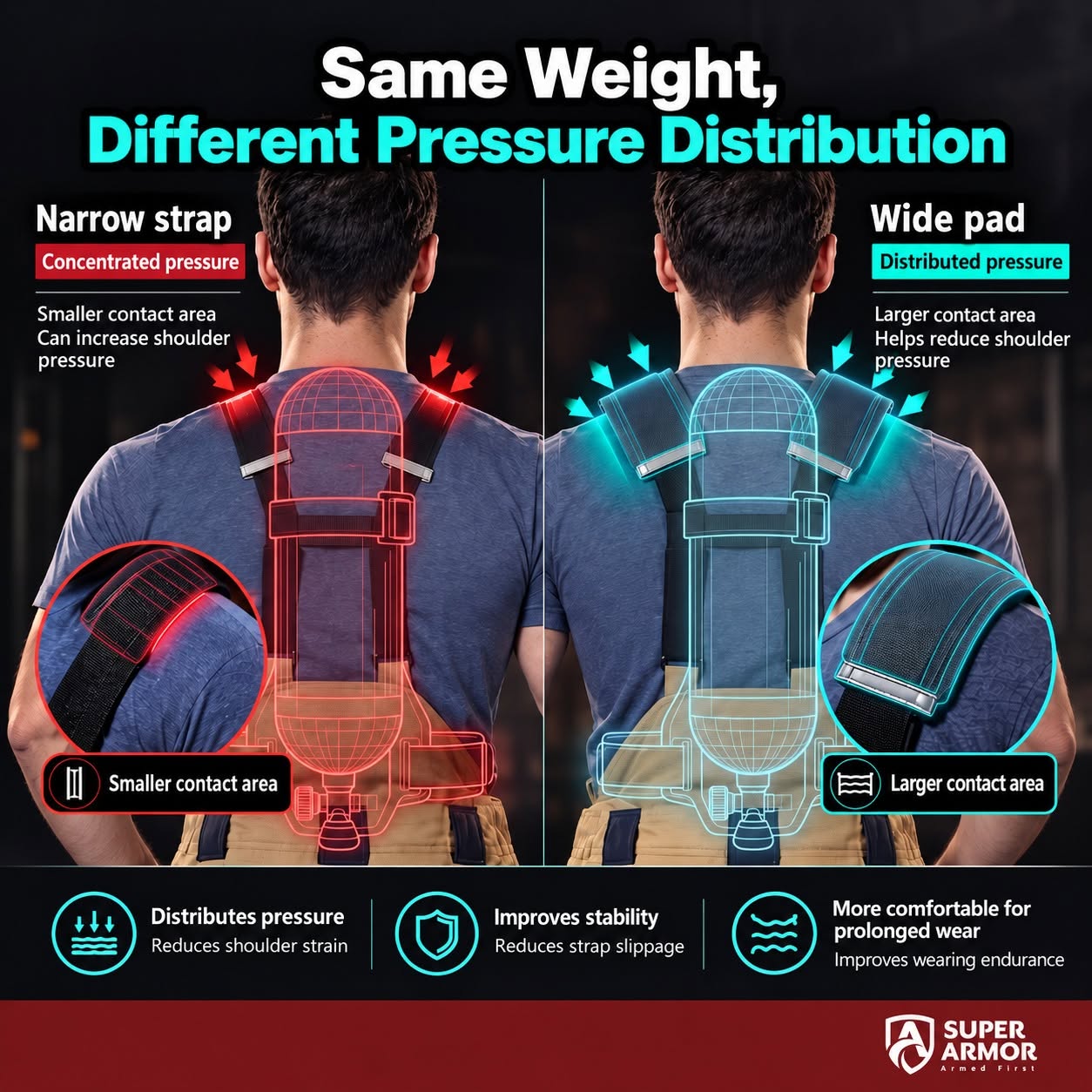
One important design feature is pad width. A wider pad provides a larger contact area, helping distribute the load across the shoulder instead of concentrating it along a narrow strap.
Wider Pads Help Distribute Pressure
When the same load is supported by a narrow strap, pressure is concentrated over a smaller area. This can create pressure points and increase strain on the shoulders, particularly during extended wear.
A wider suspender pad spreads the load over a larger contact area. It does not reduce the overall weight of the equipment, but it can help prevent that weight from being concentrated in one narrow area.
This is especially relevant when suspender straps are worn with an SCBA harness. Multiple straps may occupy the same shoulder area, making pressure distribution an important part of the overall equipment design.
Supporting Stability During Movement
Firefighters regularly bend, kneel, climb, crawl, and carry equipment. These movements can cause straps to shift or place uneven pressure on the shoulders.
A properly designed pad can help keep the suspenders in position and reduce strap slippage. This supports a more secure fit and helps keep the firefighting trousers properly positioned during movement.
The pad should also work with the suspender system and SCBA harness without interfering with adjustment, mobility, or function. The complete protective ensemble should always be fitted and evaluated as a system.
Considerations for Extended Wear
Firefighters may wear their protective equipment for extended periods, from preparation and travel to firefighting, overhaul, and returning to the station.
During prolonged use, repeated pressure and friction can become increasingly noticeable. A suitable pad design can help minimize pressure points and reduce direct contact between narrow straps and the shoulders, contributing to greater comfort over time.
However, wider does not automatically mean better. The pad must provide sufficient coverage without restricting movement or interfering with the SCBA harness, protective coat, or the wearer’s body shape.
Overall performance depends on several factors, including pad width, padding, fit, positioning, and compatibility with the rest of the protective ensemble.