


We are committed to protecting your personal data and providing you with access to your personal data in accordance with the personal data protection laws in force in the European Union.
By clicking "Accept All", you are giving us permission to place cookies to enhance your experience on this website, to help us analyze site performance and usage, and to allow us to deliver relevant marketing content. You can manage your cookie settings below. By clicking "Confirm" you agree to the current settings.
2026-08-31
Blog
Securing Firefighters Against Medical Biohazards with ASTM F1671
Firefighters respond to far more than active blazes.
As first responders at car crashes and medical emergencies, exposure to blood and bodily fluids is a constant, unexpected hazard.
While structural firefighting suits are primarily designed for thermal and fire protection rather than standard medical PPE, unexpected biohazard exposure happens on the job.
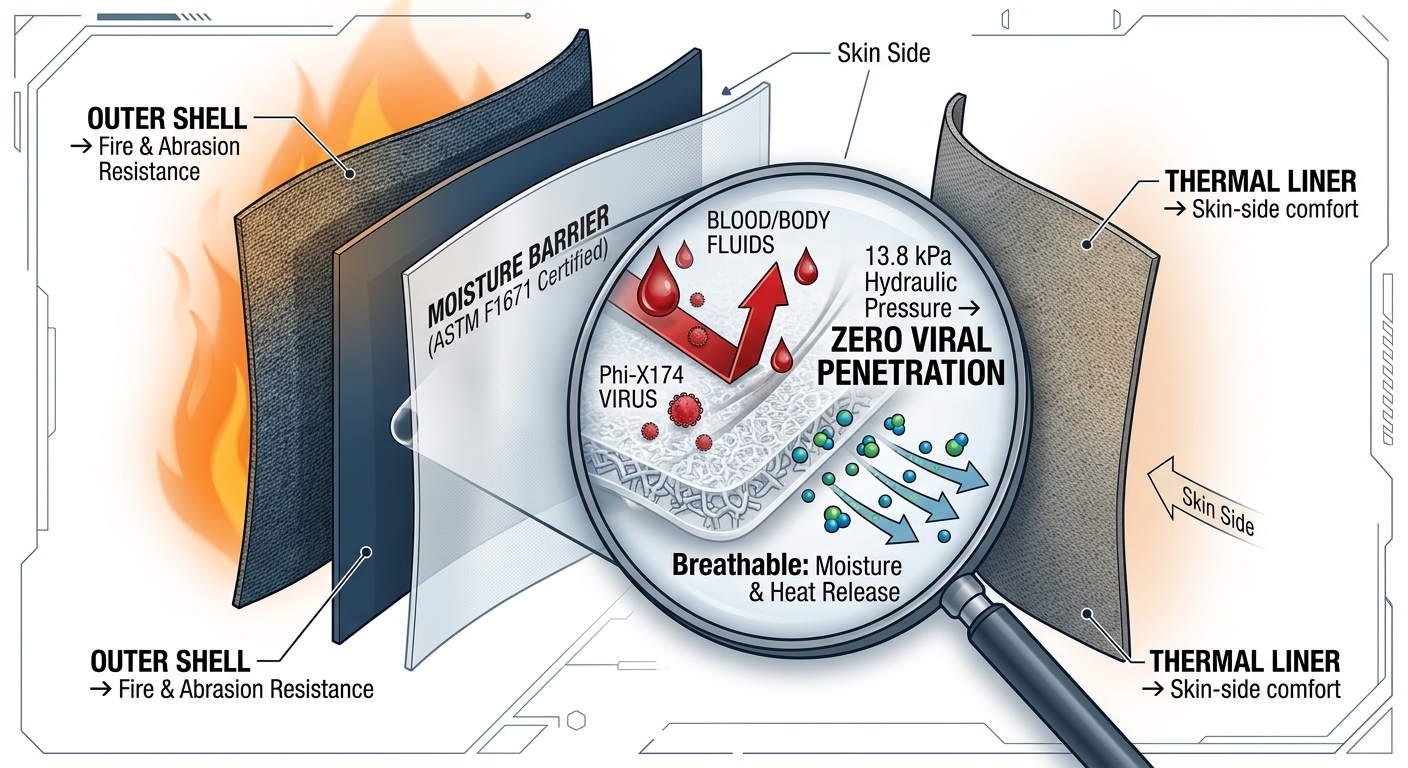
That is where ASTM F1671 comes in, the gold-standard test measuring a material’s resistance to blood-borne pathogens.
Under 13.8 kPa (2.0 psi) hydraulic pressure, fabric is challenged with microscopic surrogate viruses smaller than HIV and Hepatitis B/C. Only materials with zero viral penetration pass.
As first responders at car crashes and medical emergencies, exposure to blood and bodily fluids is a constant, unexpected hazard.
While structural firefighting suits are primarily designed for thermal and fire protection rather than standard medical PPE, unexpected biohazard exposure happens on the job.
That is where ASTM F1671 comes in, the gold-standard test measuring a material’s resistance to blood-borne pathogens.
Under 13.8 kPa (2.0 psi) hydraulic pressure, fabric is challenged with microscopic surrogate viruses smaller than HIV and Hepatitis B/C. Only materials with zero viral penetration pass.
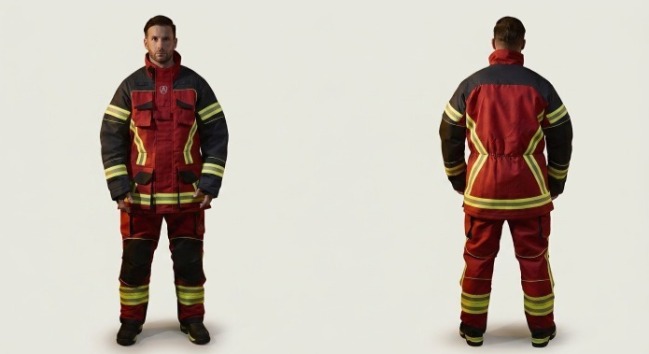
Super Armor® Guardian, structural firefighting suit
Integrates an ASTM F1671-certified moisture barrier.
It delivers a critical layer of defense against accidental fluid exposure and keeping you safe from unseen biohazards without sacrificing breathability.
It delivers a critical layer of defense against accidental fluid exposure and keeping you safe from unseen biohazards without sacrificing breathability.