


We are committed to protecting your personal data and providing you with access to your personal data in accordance with the personal data protection laws in force in the European Union.
By clicking "Accept All", you are giving us permission to place cookies to enhance your experience on this website, to help us analyze site performance and usage, and to allow us to deliver relevant marketing content. You can manage your cookie settings below. By clicking "Confirm" you agree to the current settings.
2026-03-24
Blog
The Invisible Frontline-Part 1: The Threat
The Fire That Doesn't Go Out
Today, we are looking at something bigger than PPE performance. While we often measure safety by thermal protection or fabric durability, there is a "silent fire" that doesn't go out when the smoke clears. We need to talk about the invisible frontline: Occupational Carcinogens.
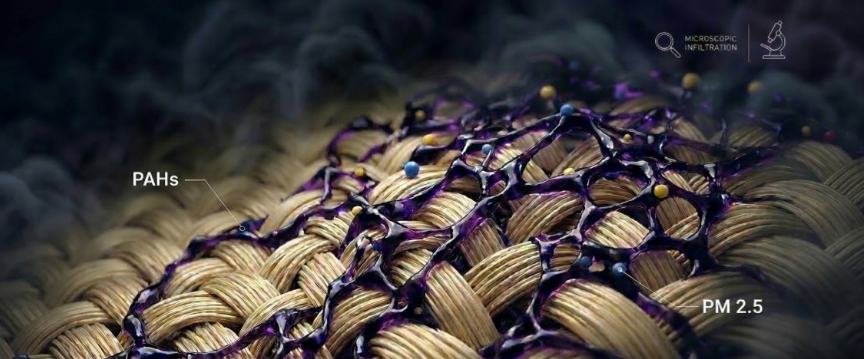
Modern firegrounds are no longer just wood and paper. Burning plastics and synthetic polymers create a toxic cocktail of PAHs (Polycyclic Aromatic Hydrocarbons), microscopic particles that are highly carcinogenic.
These carcinogens are chemically aggressive and "sticky," resisting standard decontamination protocols. This creates a persistent toxic burden that stays with the gear long after the flames are extinguished.
The real threat is Bioaccumulation: the slow, steady buildup of these toxins in the body, leading to "Late Effects" such as chronic illnesses and cancer. Understanding that these embedded threats represent a fire that never truly goes out is the first step toward a new standard of firefighter health.
Today, we are looking at something bigger than PPE performance. While we often measure safety by thermal protection or fabric durability, there is a "silent fire" that doesn't go out when the smoke clears. We need to talk about the invisible frontline: Occupational Carcinogens.
Modern firegrounds are no longer just wood and paper. Burning plastics and synthetic polymers create a toxic cocktail of PAHs (Polycyclic Aromatic Hydrocarbons), microscopic particles that are highly carcinogenic.
These carcinogens are chemically aggressive and "sticky," resisting standard decontamination protocols. This creates a persistent toxic burden that stays with the gear long after the flames are extinguished.
The real threat is Bioaccumulation: the slow, steady buildup of these toxins in the body, leading to "Late Effects" such as chronic illnesses and cancer. Understanding that these embedded threats represent a fire that never truly goes out is the first step toward a new standard of firefighter health.