

We are committed to protecting your personal data and providing you with access to your personal data in accordance with the personal data protection laws in force in the European Union.
By clicking "Accept All", you are giving us permission to place cookies to enhance your experience on this website, to help us analyze site performance and usage, and to allow us to deliver relevant marketing content. You can manage your cookie settings below. By clicking "Confirm" you agree to the current settings.
2026-01-14
Blog
EN 469:2020 Level 1 vs. Level 2 Applications
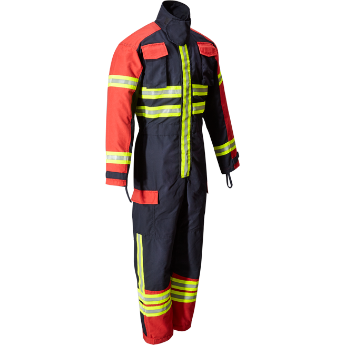
Level 1: Exterior & Support Operations (X1, Y1, Z1)
Best For: Level 1 gear is the "lightweight" tier of structural PPE. It is specifically designed for activities where the risk of direct flame engulfment or intense interior heat is low.
-
Wildland/Forest Fires: Ideal for long shifts where mobility and breathability are vital.
-
Road Traffic Collisions: Used for vehicle extrication where a minor fire risk exists.
-
Support Roles: Perfect for crews managing water supplies or decontamination outside the danger zone.
-
Safety Warning: Level 1 gear is strictly prohibited for interior attack. It does not provide the "escape time" required to survive a flashover event inside a building.
-
Tactical Focus: Mobility and comfort. Because Level 1 gear often lacks a thick moisture membrane (Y1), it is significantly lighter and more breathable (Z1), making it ideal for long-duration exterior shifts where heat stroke is a higher risk than burns.
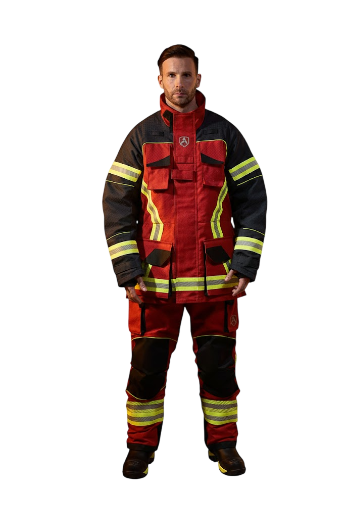
Level 2: Structural & Interior Attack (X2, Y2, Z2)
Best For: Level 2 is the gold standard for interior structural firefighting. It is built with a multi-layer composite structure designed to provide life-saving seconds in the most extreme conditions..
-
Primary Application: Interior fire attack, search and rescue in burning structures, and marine firefighting in enclosed ship compartments.
-
Search & Rescue: Provides critical seconds of protection during victim extraction in high-heat zones.
-
Marine Firefighting: Required for enclosed ship compartments where steel hulls trap extreme heat.
-
Tactical Focus: Maximum thermal protection. Under the 2020 revision, Level 2 gear must pass a Contact Heat test, ensuring protection for at least 10 seconds if a firefighter leans against a 250°C surface.
-
EV Battery Fires: The Y2 (Waterproof) rating protects against high-pressure steam and chemical spray.
-
Environmental Barrier: Level 2 suits feature a high-performance moisture barrier (Y2) that prevents hot water and steam from penetrating the suit—a critical feature when fighting fires with high-pressure hose lines in confined spaces.